Nobody in 2001 thought a movie about Los Angeles street racers would still be running twenty-five years later. The Fast and the Furious opened as a small, loud action film about an undercover cop infiltrating the world of illegal racing. The crew’s big crime? Hijacking trucks for DVD players. That detail alone dates the movie perfectly. And yet here we are: ten main films, one spinoff, and more than $7 billion at the worldwide box office.
The first film worked because the cars felt real. This wasn’t a glossy superhero movie. It was night races in the streets of LA, neon underglow, turbocharged Japanese imports, and a hero who actually knew how to drive. Brian O’Conner, played by Paul Walker, was the audience’s way in — a cop pretending to be a racer. Dominic Toretto, played by Vin Diesel, was the opposite: a man who lived by a code, loved his sister, his crew, and his father’s black 1970 Dodge Charger. The final race between Brian’s orange Toyota Supra and Dom’s Charger is still one of the most replayed scenes in the franchise.
Then came the turning point. For years the series stayed close to street racing, and by 2009 it was running out of road. Fast Five (2011) changed everything. The movie moved to Rio, turned into a full-blown heist, and brought in Dwayne Johnson as Luke Hobbs, the federal agent hunting Dom’s crew. The bank vault dragging scene — a giant safe being towed through the streets of Rio — told the audience exactly what the franchise had become: bigger, louder, and completely unafraid of being ridiculous. It worked. Fast Five made more than double what the previous film did, and the series never looked back.
But cars alone don’t explain why people keep coming back. The real engine of Fast & Furious is family — and for once, that isn’t just a marketing word. Dom’s famous line, “I don’t have friends, I got family,” became the franchise’s identity. Audiences watched these characters grow up together across two decades: Letty, Mia, Roman, Tej, and later Hobbs and Shaw. When Paul Walker died in a car accident in 2013, during the filming of Furious 7, the franchise faced its hardest moment. The film’s ending — Brian driving off into the sunset to Wiz Khalifa’s “See You Again” — wasn’t just a goodbye to a character. Millions of fans cried in theatres, and Furious 7 went on to make over $1.5 billion, the highest of any film in the series.
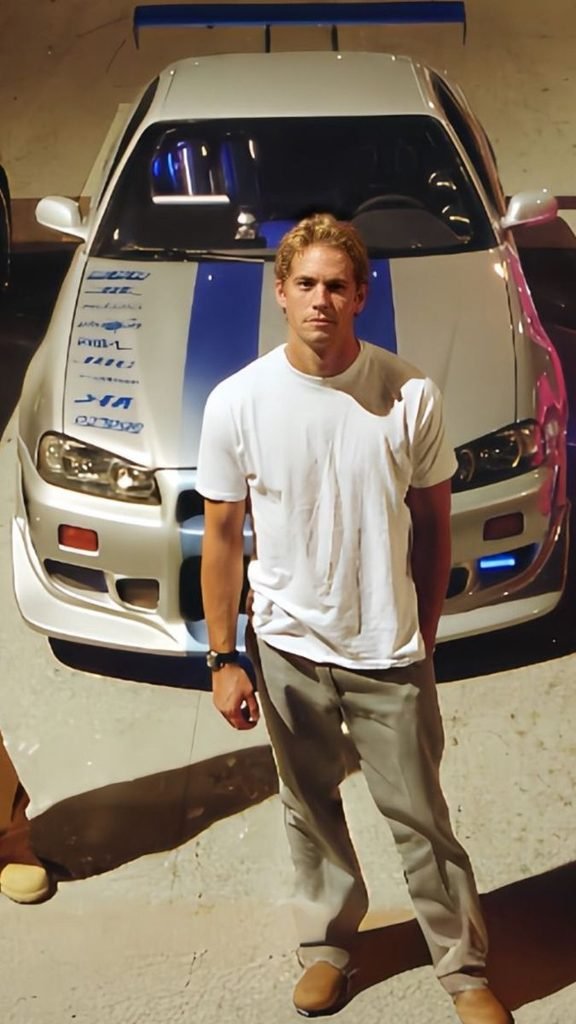
The franchise also changed car culture itself. Before 2001, Japanese tuner cars were a niche scene. After it, everybody knew what a Supra was, what NOS did, and why a Skyline GT-R mattered. Prices of the hero cars shot up. Video games, car meets, and aftermarket parts all borrowed from the look the films created. Even today, a black Charger or an orange Supra is instantly recognisable anywhere in the world — and that is entirely because of these movies.
Of course, the scale kept growing, sometimes past the point of belief. Dom jumped a supercar between skyscrapers in Abu Dhabi. The crew fought a nuclear submarine. In F9, they literally went to space in a modified car — and somehow, the audience went along with it. That’s the trick the franchise figured out: once the audience accepts the family, they’ll accept almost anything the family does.
Fast X (2023) set up the endgame, with Jason Momoa’s villain tearing Dom’s world apart and the story left on a cliffhanger. Whatever the finale looks like, the legacy is already set. Fast & Furious started as a movie about street racing and became a story about loyalty, loss, and the people you choose to stand beside. The cars got it noticed. The family is why it never left.